
Introduction to Western Saddles and Tack
Western saddles are designed for comfort, stability, and long hours of riding, especially for ranch work, trail riding, and rodeo events. In general, they distribute the rider’s weight over a larger surface area of the horse’s back. Tack refers to all the equipment used with the saddle, including bridles, bits, cinches, breast collars, and saddle pads. Together, western saddles and tack form a complete system that ensures control, communication, and comfort between horse and rider.
Main Components of a Western Saddle
A western saddle is made up of several key parts: the tree (internal frame), seat, horn, cantle, skirts, fenders, and stirrups. Notably, the saddle horn is especially iconic and is used for securing ropes in ranch work. The skirts help distribute pressure, while the fenders and stirrups provide leg support and balance. Overall, each component plays a role in rider stability and horse comfort during different riding activities.
Overview of Western Tack Equipment
Western tack includes all additional gear beyond the saddle itself. The bridle and bit allow directional control of the horse, while the reins connect the rider’s hands to the horse’s mouth. The cinch (or girth) keeps the saddle securely in place. In addition, breast collars help prevent the saddle from sliding backward, especially on steep terrain. Proper tack selection is essential for safe and effective riding.
Importance of Proper Saddle Fit
A properly fitted western saddle is critical for the horse’s health and performance. However, an ill-fitting saddle can cause pressure points, soreness, or long-term back damage. Saddle fit must consider the horse’s withers, back shape, and movement. Therefore, riders must also ensure the saddle suits their body type and riding discipline to maintain balance and control.
Materials Used in Saddles and Tack
Western saddles are traditionally made from leather, valued for its durability and ability to mold over time. In contrast, synthetic materials are also used in modern designs for lighter weight and easier maintenance. Tack may include stainless steel hardware, rubber reins, and nylon cinches. As a result, the choice of materials affects durability, comfort, and maintenance requirements.
Western Riding Disciplines and Saddle Variations
Different western riding activities require specialized saddle designs. Ranch saddles are built for durability and long workdays. Barrel racing saddles are lightweight for speed and agility. Cutting and reining saddles offer close contact and flexibility for precise movements. Meanwhile, trail saddles prioritize comfort for long-distance riding. Each variation reflects the demands of its discipline.
Care and Maintenance of Saddles and Tack
Proper maintenance extends the life of saddles and tack. Leather equipment should be cleaned regularly with saddle soap and conditioned to prevent cracking. Metal components should be checked for rust and wear. Furthermore, tack should be inspected before every ride for safety. Storing equipment in a dry, ventilated space helps preserve its condition over time.
Role of Saddle Pads in Western Riding
Saddle pads are placed between the saddle and the horse’s back to provide cushioning, absorb sweat, and improve saddle fit. In fact, they help distribute pressure evenly and reduce friction. Pads come in various materials such as felt, wool, gel, and foam. Consequently, choosing the right pad can significantly improve a horse’s comfort and performance.
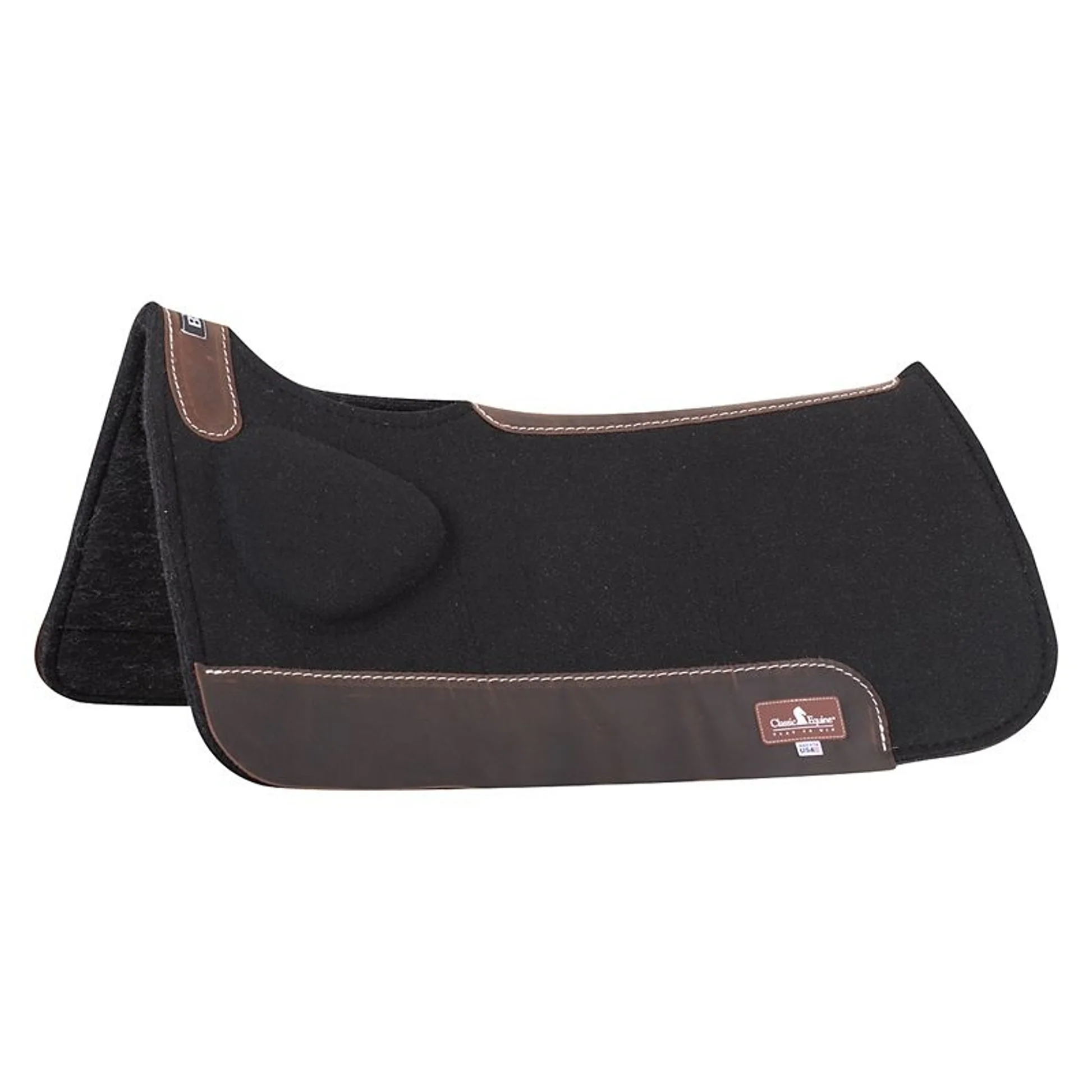
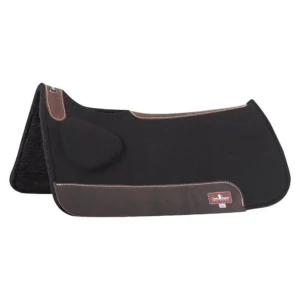
Classic Equine BioFit Correction Felt Pad
The Classic Equine BioFit Correction Felt Pad is a high-performance western saddle pad designed to enhance saddle fit and horse comfort. It features a dense felt base that provides excellent shock absorption and moisture-wicking properties. What makes it especially useful is that it includes a correction system with removable shim pockets that allow riders to adjust saddle balance and fill uneven pressure points. As a result, this helps improve saddle alignment on horses with changing musculature or imperfect saddle fit.
The pad is often used in performance disciplines where precision fit is critical, such as reining, cutting, and ranch work. Additionally, its contoured shape helps reduce pressure on the withers and spine, promoting better freedom of movement. The durable construction ensures long-term use even under heavy riding conditions. Therefore, riders appreciate its ability to adapt to different horses with minimal adjustment effort.
Conclusion
Western saddles and tack form an essential system for effective and safe horseback riding. In summary, from the saddle tree to the smallest piece of tack, every component contributes to communication, balance, and comfort. Specialized equipment like the Classic Equine BioFit Correction Felt Pad further enhances performance by ensuring better saddle fit and reducing pressure points. Ultimately, understanding and properly maintaining this equipment helps both horse and rider perform at their best.
Lucien Noel (verified owner) –
Good quality materials throughout.
Sofia Lund (verified owner) –
My horse seems happier during and after use.
Magda Piotrowska (verified owner) –
Very suitable for daily use.
Jan Kühn (verified owner) –
A practical addition to any professional setup.
Oscar Nilsson (verified owner) –
No negative reactions.
Bastien Morel (verified owner) –
The results are dependable and repeatable.
Cristian Dumitrescu (verified owner) –
It allows complete freedom of movement.
Radu Popescu (verified owner) –
My horse moves more freely now.
Natalia Kaczmarek (verified owner) –
No issues with performance at any stage.
Michal Pawlak (verified owner) –
Stable essential.
Alexander Schulte (verified owner) –
No complaints from my side.
Christian Meier (verified owner) –
My horse feels more balanced from the moment I get on.